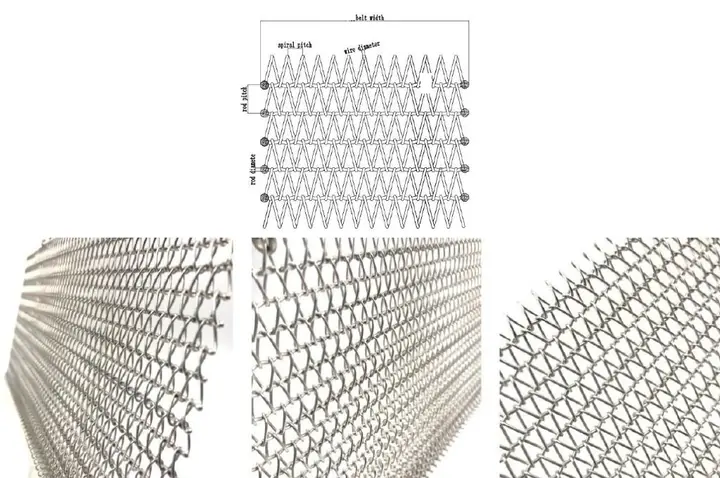
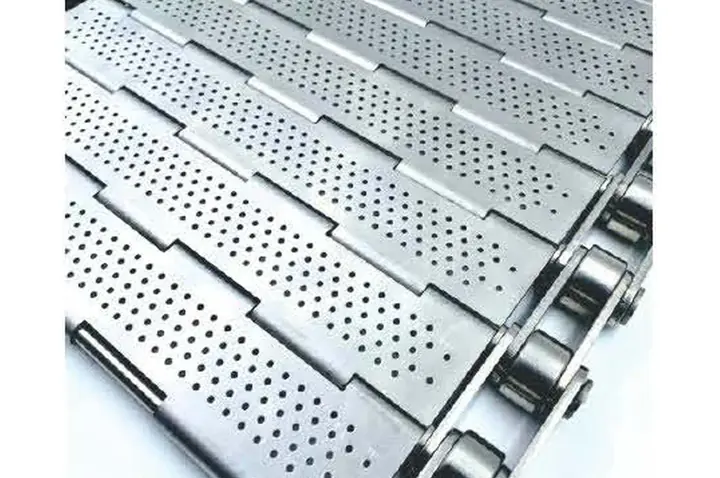
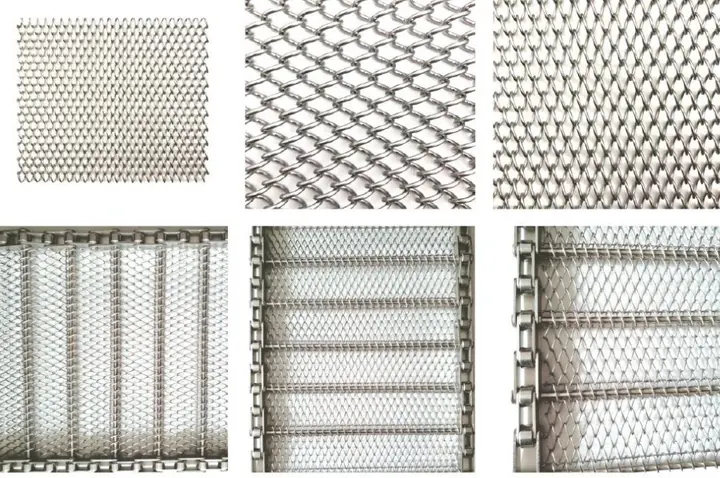
Wire mesh belt on chain edges
Chain Driven Wire Mesh Belt
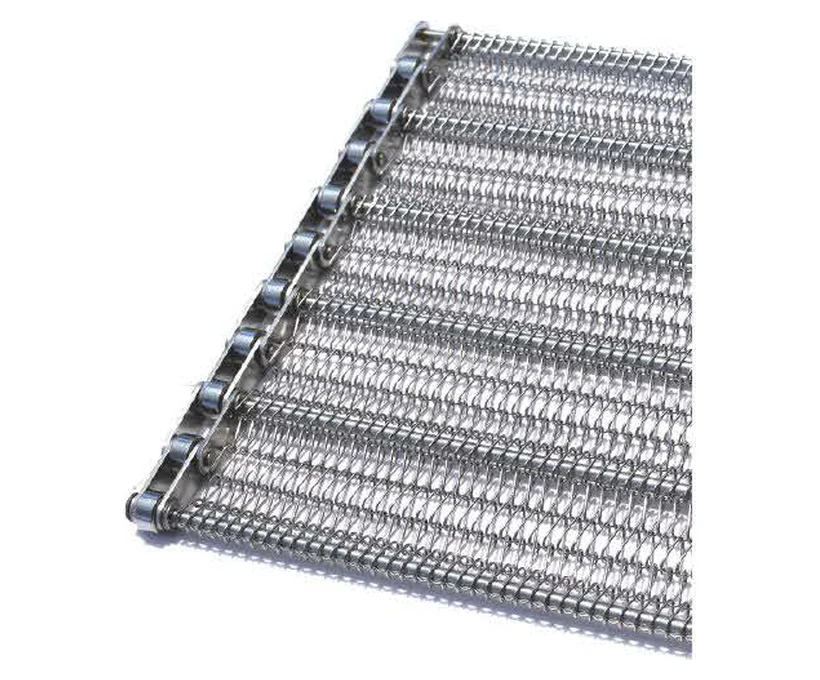
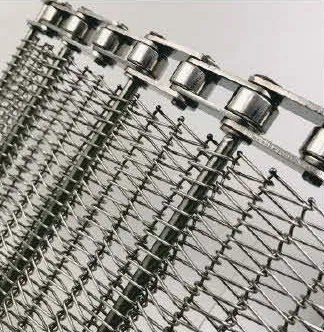
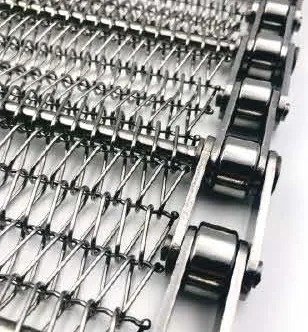
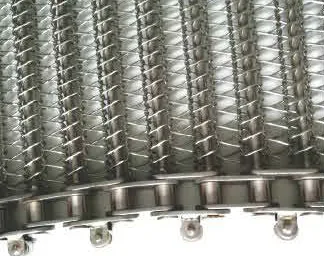
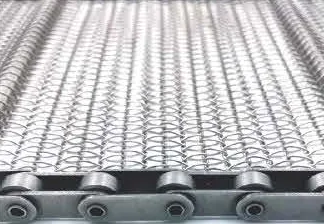
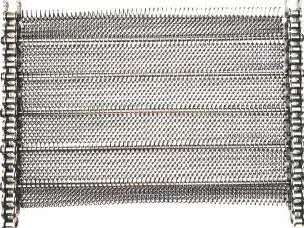
Chain driven belts combine a wire mesh surface with cross rods and roller chains on the edges. The chains take the drive load, so the mesh doesn't have to – which makes these belts ideal for heavy loads, inclines, long conveyors and anywhere a friction-driven belt would slip.
- Carbon steel or stainless
- 200–5000 mm wide
- Chain pitch 12.7–101.6 mm
- Side guards & flights
- Straight, incline & heavy load
Mesh style, rod diameter and chain size are chosen for your product, belt width, length and running speed.
Chain driven belt specifications
Standard specifications below. Special sizes and materials can be made to order.
| Material | Carbon steel, SS201, SS304 or SS316 |
|---|---|
| Chain pitch | 12.7, 15.875, 19.05, 25.4, 31.75, 38.1, 50.8, 63.5, 76.2 and 101.6 mm |
| Roller diameter | 24, 26 and 38.1 mm |
| Wire diameter | 1.2, 1.4, 1.5, 1.6, 1.8, 2.0, 2.5 and 3.0 mm |
| Spiral pitch | 2.8 – 40 mm |
| Rod pitch | 5 – 50.8 mm |
| Belt width | 200 – 5000 mm |
| Belt length | Made to order |
| Edge finish | Welded or clenched |
| Drive | Sprockets on the chains (made to order) |
| Options | Side guards on both edges, cross flights on the mesh surface |
How a chain driven belt is built
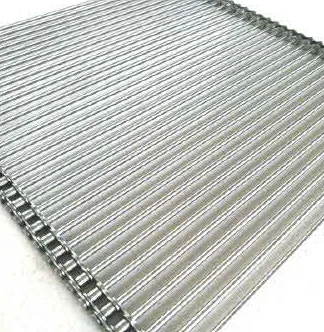
A chain driven belt is made up of wire mesh, cross rods and chains. The mesh style, rod diameter, spiral pitch and rod pitch are chosen for the type, shape, size and weight of the product.
The chain size and cross rod specification are chosen for the belt's width, length, running speed and the conveyor's mechanical layout.
Almost any mesh can be mounted on chains – balanced weave and one-directional mesh are the most common. Support can be pins, flat bars or tubes.
Why choose a chain driven belt
- The chains are sprocket driven, giving smooth running and taking load off the mesh surface.
- Smooth mesh plus solid rod support handles high loads and high tension.
- Self-supporting design works where friction-driven belts can't – straight, incline, heavy-load and long-distance conveyors.
- Nearly any type of wire mesh can be assembled onto chains.
- Support options include pins, flat bars or tubes, depending on the application.
- Side guards and cross flights can be added to hold and move product.
Where chain driven belts are used
Used wherever a belt has to carry heavier loads, climb an incline or run a long distance.
Chain Driven Belt data sheet
Full specifications, drawings and product photos in one PDF.
Get a quote for a chain driven belt
Tell us what the belt needs to do and the size you need. We'll come back to you with a price and the right specification for your line.
- Belt width and length (or the old belt's details)
- Operating temperature and product carried
- Drive type and sprocket details, if known
- Prefer WhatsApp? Message us
- Or email sales@beltingedge.co.za
Chain Driven Belt FAQs
When should I use a chain driven belt instead of a friction-driven belt?
When the load is heavy, the conveyor is long or inclined, or a friction-driven belt would slip. The chains carry the drive load, so the mesh runs without stretching or slipping.
Which mesh types can be used?
Nearly all types of wire mesh can be mounted on chains. Balanced weave and one-directional mesh are the most common.
Which materials are available?
Carbon steel, SS201, SS304 and SS316.
Can you add side guards or flights?
Yes. Side guards can be fitted on both edges and cross flights in the centre of the mesh surface.
Do you supply sprockets?
Yes. Sprockets are made to order to match the belt's pitch and your drive shaft, in the material you need.
What do you need from me for a quote?
The belt width and length, what it will carry, the operating temperature and, if possible, drawings, photos or details of your current belt. Use the quote form on this page or send us a WhatsApp.