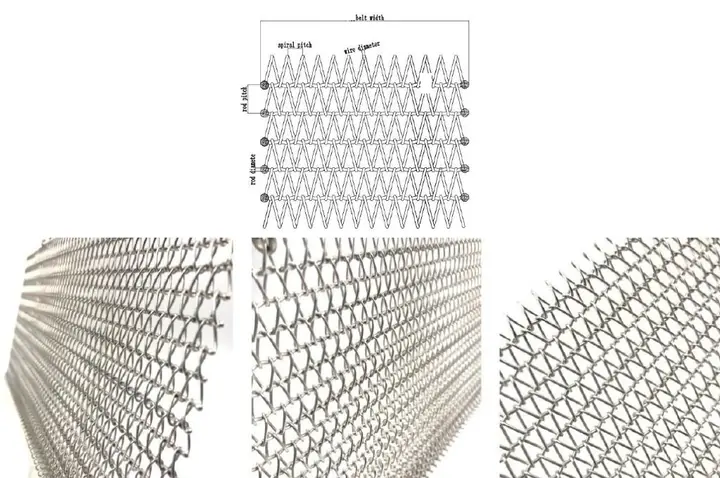
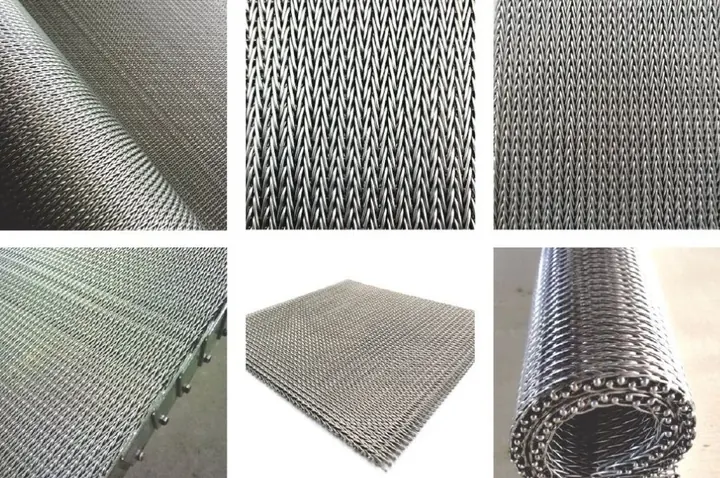
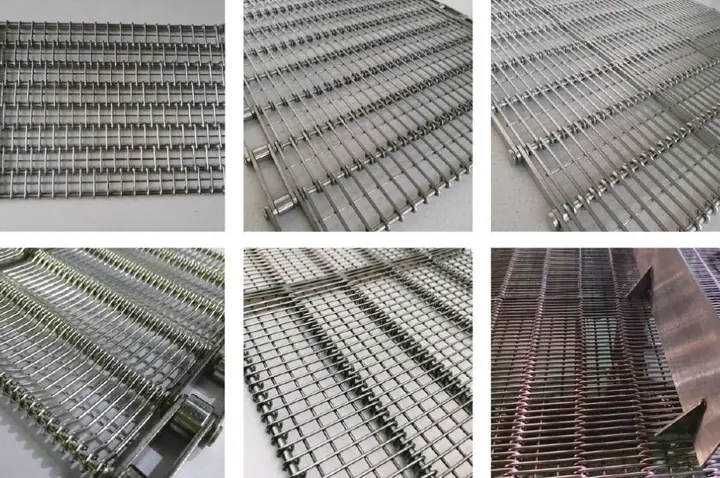
Lightweight wire mesh conveyor belt
Conventional Weave Conveyor Belt
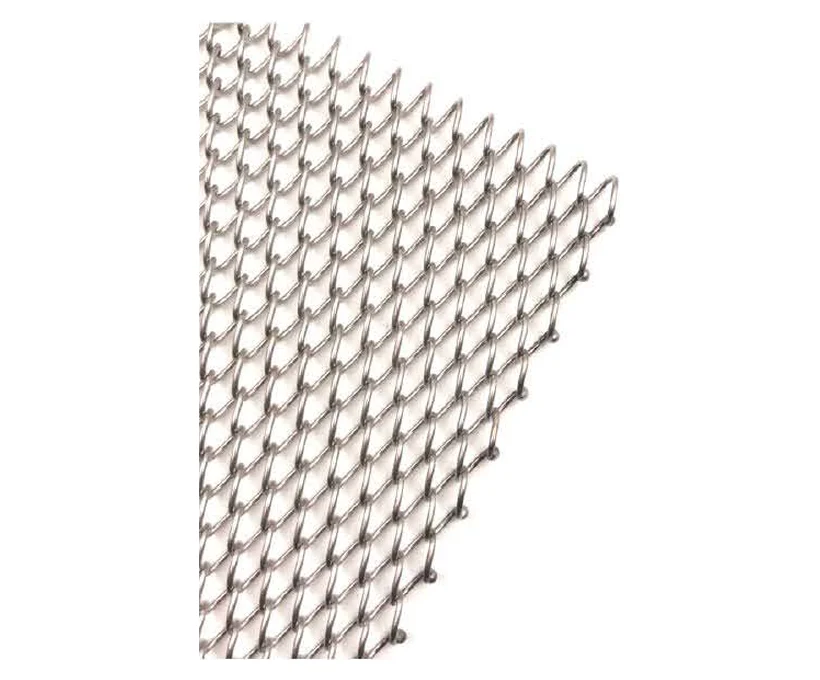
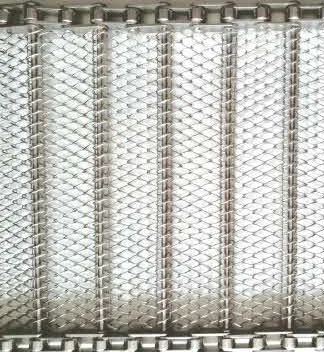
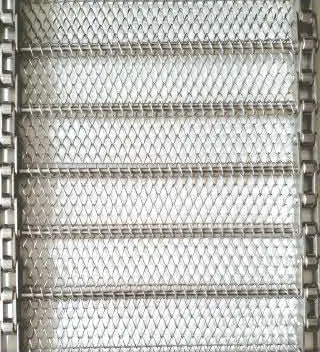
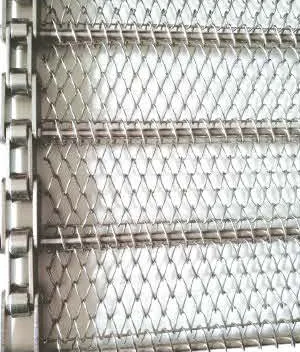
Conventional weave belts are a lightweight, cost-efficient wire mesh belt made from single-direction spirals. They're flexible and very open, which makes them ideal for washing, drying and cooling, and for continuous light-to-medium duty conveying.
- Carbon steel or stainless
- 200–5000 mm wide
- Lightweight, low cost
- Large open area
- Light-to-medium duty
Belt creep can be controlled by alternating the spiral direction at set intervals.
Conventional weave belt specifications
Standard specifications below. Special sizes and materials can be made to order.
| Material | Carbon steel, SUS201, SUS304 or SUS316 |
|---|---|
| Wire diameter | 1.2, 1.4, 1.5, 1.6, 1.8, 2.0, 2.5 and 3.0 mm |
| Rod pitch | 5 – 30 mm |
| Spiral pitch | 6 – 40 mm |
| Belt width | 200 – 5000 mm |
| Belt length | Made to order |
| Drive | Material and sprockets made to order |
How a conventional weave belt is built
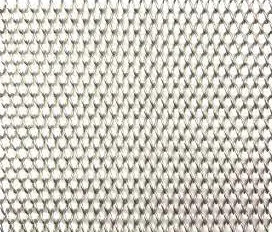
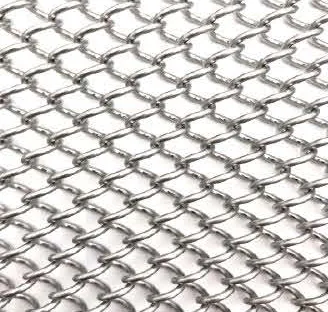
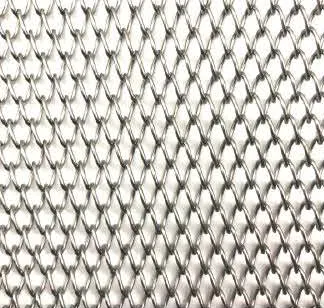
Conventional weave belts are made from single-direction spirals interwoven with the spirals next to them to form a uniform mesh.
They're flexible, run smoothly and have a large open area for airflow and circulation.
Easy to install, maintain and repair, they suit continuous-use applications in food processing, electronics and other light-to-medium duty conveying.
Why choose a conventional weave belt
- Lightweight and cost-efficient, with lower energy and running costs.
- Open structure – ideal for washing, cleaning and drying.
- Belt creep can be minimised by alternating the spiral winding direction at regular intervals.
- Easy to install, maintain and repair.
Where conventional weave belts are used
A practical, economical belt for food processing and light industrial lines.
Conventional Weave Belt data sheet
Full specifications, drawings and product photos in one PDF.
Get a quote for a conventional weave belt
Tell us what the belt needs to do and the size you need. We'll come back to you with a price and the right specification for your line.
- Belt width and length (or the old belt's details)
- Operating temperature and product carried
- Drive type and sprocket details, if known
- Prefer WhatsApp? Message us
- Or email sales@beltingedge.co.za
Conventional Weave Belt FAQs
How is conventional weave different from balanced weave?
Conventional weave uses single-direction spirals, making it lighter and more economical. Balanced weave alternates left and right spirals for straighter tracking and heavier loads.
Does a conventional weave belt drift to one side?
Belt creep can be minimised by alternating the spiral winding direction at regular intervals.
Which materials are available?
Carbon steel, SUS201, SUS304 and SUS316.
What do you need from me for a quote?
The belt width and length, what it will carry, the operating temperature and, if possible, drawings, photos or details of your current belt. Use the quote form on this page or send us a WhatsApp.